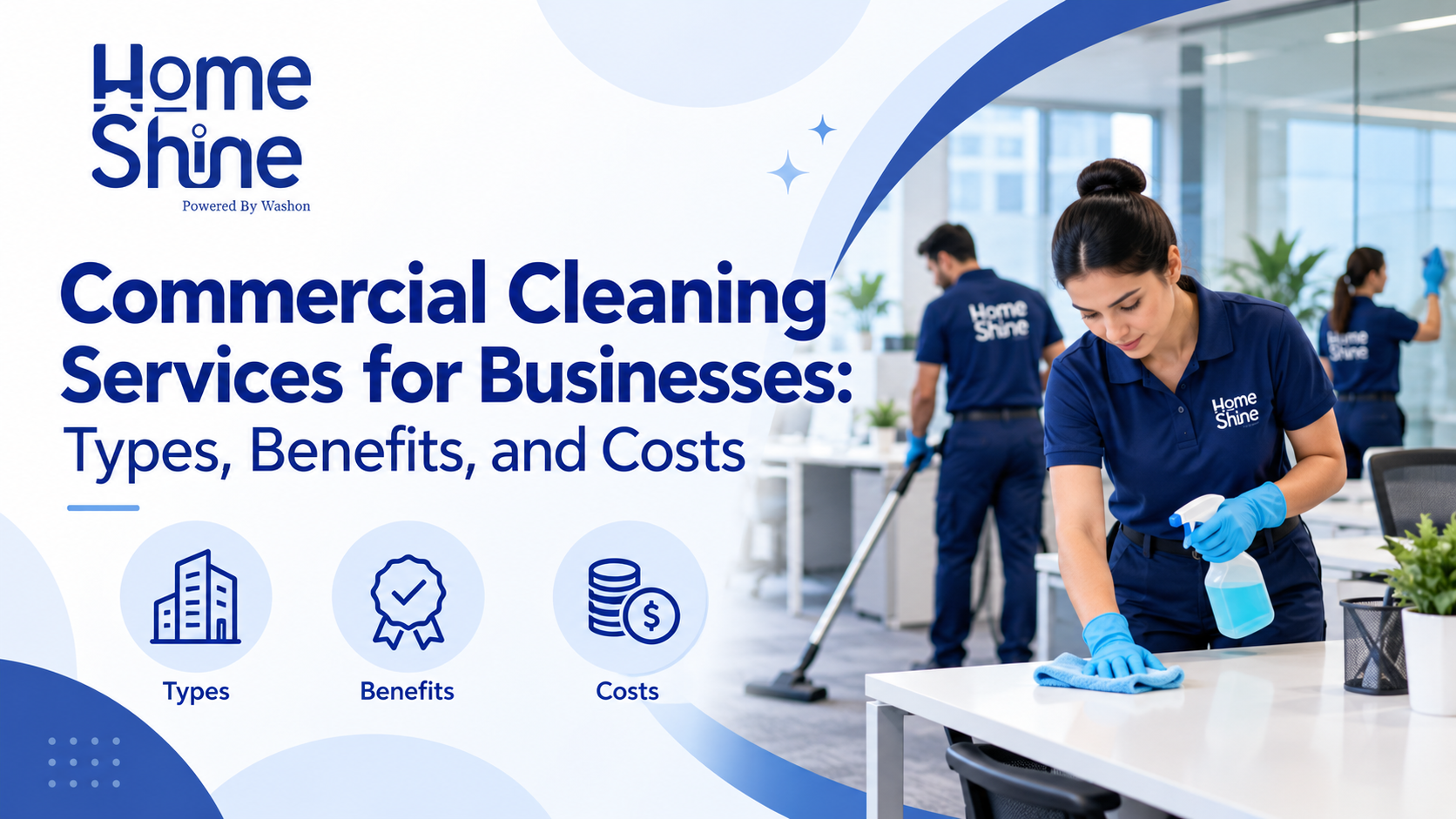
A visitor walks into your office and notices the fingerprints on the glass door, the dust along the reception desk, and a faint stale smell in the meeting room. Nobody says anything, but an impression has formed. Cleanliness is one of the few things every client, employee, and inspector judges within seconds, and it rarely gets a second chance. For most companies, the question is not whether to clean but who should do it and how. Hiring a professional cleaning service for business use has become the default choice for offices, clinics, retail stores, warehouses, and hospitality venues. This guide explains what commercial cleaning includes, the main service types, the real benefits, how pricing works, and how to choose a provider, with a focus on the Dubai market.
What Is a Cleaning Service for Business?
A cleaning service for business covers the professional cleaning and sanitation of non-residential spaces. That includes offices, shopping outlets, restaurants, schools, healthcare facilities, gyms, warehouses, and residential building common areas. It differs from household cleaning in a few practical ways. The spaces are larger, they see far more foot traffic, and the work is usually scheduled around business hours. Providers also use commercial-grade equipment such as industrial vacuums, floor scrubbers, and steam machines, along with trained staff who follow defined checklists and safety procedures.
In B2B cleaning, the relationship is also contractual. You are not booking a one-off visit. You are agreeing on a scope of work, a schedule, quality standards, and a price, and expecting the same result every time. A good cleaning service for business behaves less like a vendor you call when things get messy and more like an extension of your facilities team.
Main Types of Commercial Cleaning
Most providers offer a menu of services. Understanding each one helps you buy only what you need from a cleaning service for business.
Daily or Routine Office Cleaning
This is the backbone of most contracts. It covers emptying bins, vacuuming, mopping, dusting surfaces, wiping desks and shared equipment, and cleaning washrooms and pantries. Many offices schedule this after hours so staff arrive to a fresh workspace.
Deep Cleaning
Deep cleaning goes beyond the surface. Think of scrubbing grout, cleaning behind and under furniture, descaling washroom fixtures, and treating high-touch areas thoroughly. Businesses typically book it quarterly, before a major event, or after a renovation or relocation.
Carpet and Upholstery Cleaning
Carpets trap dust, allergens, and stains. Hot water extraction or dry cleaning methods restore them, and regular treatment extends their lifespan, which matters when replacing office flooring is expensive.
Window and Facade Cleaning
Glass exteriors are a signature feature of many commercial buildings. Cleaning them often requires rope access or cradle systems and trained crews, so this is almost always handled by specialists.
Post-Construction Cleaning
After fit-outs or renovations, spaces are covered in fine dust, adhesive residue, paint splatter, and debris. A dedicated post-construction cleaning crew makes the space safe and presentable for handover.
Disinfection and Sanitization
Healthcare clinics, schools, gyms, and food businesses often need scheduled disinfection focusing on high-touch surfaces like door handles, lift buttons, and shared workstations.
Floor Care
Polishing, buffing, and sealing marble, tile, vinyl, or concrete floors keeps them looking good and protects them from wear. Retail and hospitality venues pay particular attention to this.
Specialized Industrial Cleaning
Warehouses, factories, and kitchens have their own demands, including degreasing, ventilation and duct cleaning, and machinery-adjacent cleaning that must follow strict safety rules.
Why Businesses Outsource Cleaning
Some companies start with in-house cleaners and later switch to an external cleaning service for business. The reasons tend to be practical rather than theoretical.
Consistency. A professional company works from checklists and supervision. If one cleaner is absent, a replacement covers the shift. With an in-house hire, absences mean gaps. Better first impressions. Reception areas, meeting rooms, and washrooms shape how clients see your brand. Clean spaces signal that the business pays attention to detail. Healthier workplaces. Shared surfaces spread germs quickly. Regular sanitizing supports fewer sick days and a more comfortable working environment, though the exact impact varies by workplace. Predictable costs. A contract turns a messy mix of salaries, supplies, equipment, and management time into a defined monthly figure. Access to equipment and expertise. Buying floor scrubbers, carpet extractors, and specialized chemicals rarely makes sense for a single office. A cleaning service for business spreads that cost across many clients, so you get professional tools without owning them. Time back for your team. Managers who would otherwise handle cleaning schedules, supply orders, and staff issues can focus on the business itself. Longer asset life. Properly maintained floors, carpets, glass, and fixtures last longer, which reduces replacement spending over the years.
What B2B Cleaning Contracts Usually Look Like
A good contract removes ambiguity. Most B2B cleaning agreements include:
- Scope of work: exactly which areas and tasks are covered, and at what frequency.
- Schedule: daily, weekly, or custom visits, and whether they happen during or after business hours.
- Supplies and equipment: who provides consumables such as hand soap, tissue, and bin liners.
- Staffing: number of cleaners, supervision, and how absences are covered.
- Quality checks: inspection routines, reporting, and how complaints are handled.
- Duration and termination terms: contract length, notice periods, and price review clauses.
- Insurance and liability: who is responsible for damage or accidents. Read the scope carefully. Disputes usually come from assumptions, such as one side thinking window cleaning was included and the other not. Whichever cleaning service for business you choose, get every task written down.
How Much Does a Cleaning Service for Business Cost?
Because prices depend heavily on the site, any figure quoted without seeing your premises should be treated with caution. What you can understand in advance is how providers build their pricing.
Common Pricing Models
Per square foot or square meter. Common for offices and retail spaces, especially when the layout is straightforward. Hourly rate. Suits smaller jobs, irregular needs, or deep cleaning where the time required is hard to predict. Fixed monthly fee. Popular for ongoing contracts. You pay a set amount for a defined scope and schedule. Per-project pricing. Used for one-off work like post-construction cleaning or annual deep cleans.
What Influences the Price
- Size and layout of the space
- Cleaning frequency and number of visits per week
- Number of washrooms, pantries, and high-traffic zones
- Type of flooring and surfaces
- Whether supplies and equipment are included
- Time of service (after-hours or weekend work can cost more)
- Level of specialization, such as healthcare-grade disinfection
- Contract length, since longer commitments often earn better rates
A Word on Cheap Quotes
The lowest price is not always the best value. Extremely low quotes can signal underpaid staff, rushed visits, diluted chemicals, or missing insurance. When comparing any cleaning service for business, ask each provider what is included, then compare the quotes on scope rather than the headline number.
Commercial Cleaning Services in Dubai: What Is Different Here
Dubai's business environment brings a few local factors that shape how cleaning should be planned. Dust and sand. Fine desert dust settles on window ledges, vents, and floors far faster than in many other cities. Businesses often need more frequent dusting and floor care, and air conditioning vents benefit from regular attention. Heat and humidity. Air conditioning runs most of the year, which affects indoor air quality and can encourage mold in neglected areas. Duct and vent cleaning deserve a place in your maintenance plan. High-rise buildings. Glass towers require professional facade and window cleaning teams with proper access equipment and safety training. Diverse building types. From Business Bay offices and Jumeirah retail outlets to industrial units in Al Quoz and Dubai Investments Park, requirements vary enormously. A provider that understands each setting will scope the work more accurately. Regulatory expectations. Businesses in the food, healthcare, and hospitality sectors face inspection standards. When comparing commercial cleaning services in Dubai, confirm that the provider holds a valid trade license and follows local health and safety requirements. It is worth checking the current rules with the relevant authorities directly, since requirements can change. Building management rules. Many towers set their own working hours, service lift access, and contractor approvals. A cleaning service for business that already knows these procedures avoids delays on day one.
How to Choose the Right Provider
A practical checklist helps you compare companies fairly. 1. Verify credentials. Ask for the trade license and proof of liability insurance. 1. Ask about staff. Are cleaners employed directly, trained, and supervised? Turnover and training affect quality. 1. Request references. Speak with businesses similar to yours in size and sector. 1. Do a site visit. A reputable company will inspect your premises before quoting rather than guessing. 1. Check the products and equipment. Ask which chemicals they use, especially if you have sensitive areas like clinics or kitchens. 1. Understand reporting. Look for checklists, inspection logs, and a clear escalation path if something goes wrong. 1. Start with a trial period. A short pilot lets you judge the standard before committing to a long contract. 1. Read the contract terms. Pay attention to notice periods, price increases, and what happens if service falls short.
Frequently Asked Questions
- How often should an office be professionally cleaned? It depends on foot traffic and the type of business. Most offices are cleaned daily or several times a week, with a deeper clean each month or quarter. Clinics, restaurants, and gyms usually need daily service, and sometimes multiple visits per day.
- Is it better to hire an in-house cleaner or a cleaning service for business? An in-house cleaner can work for very small spaces with steady needs. For most companies, an external cleaning service for business offers more reliability, backup staffing, specialized equipment, and clearer costs. The right choice comes down to size, budget, and how much management time you want to spend on cleaning.
- What does B2B cleaning mean? B2B cleaning refers to cleaning services provided by one business to another, as opposed to services for households. These arrangements are typically governed by contracts, scheduled on a recurring basis, and priced according to the size and requirements of the commercial space.
- Can a cleaning service for business work outside office hours? Yes, and many businesses prefer it. Night and early-morning services avoid disruption and let staff work in a fresh environment. Some providers charge differently for after-hours work, so confirm this when requesting a quote.
- Do commercial cleaners supply their own equipment and products? Most do, but arrangements vary. Some contracts include all supplies and equipment in the fee, while others charge separately for consumables like tissue, soap, and liners. Make sure this is written into your agreement.
- How do I know if a quote is fair? Get at least three quotes based on the same written scope, and compare what is included rather than the total alone. Unusually low prices deserve questions about staffing, supervision, and insurance.
- What should I look for in commercial cleaning services in Dubai? Look for a valid trade license, experience with your building type, trained and supervised staff, insurance, and familiarity with building management procedures. Sector-specific experience matters too if you operate in food, healthcare, or hospitality.
- How long are typical cleaning contracts? Many contracts run for 6 to 12 months, sometimes longer, with notice periods for termination. Shorter trial periods are often available if you want to test a provider first.
Final Thoughts
Cleanliness shapes how clients see you, how employees feel at work, and how long your premises stay in good condition. The best results come from treating a cleaning service for business as an operational decision rather than an afterthought: define your scope clearly, compare providers on substance, and choose a partner who understands your building and industry. A clean workplace does more than remove dust and dirt. It helps create a space where clients feel comfortable, employees can work without distractions, and your business is ready for the next visitor, meeting, or busy day.
If you are searching for a cleaning service for business in Dubai, start by listing your spaces, your preferred schedule, and any special requirements. With that in hand, you can request comparable quotes, run a short trial, and settle into a contract that keeps your workplace at the standard your business deserves. Explore commercial cleaning services for businesses, their types, benefits, pricing factors, and how professional cleaning can improve your workplace.